
Biltong. Eat as a snack. Anytime. Biltong can contain up to 67% protein*. Grate or slice it for your apéro snacks. Best on Provitas, Salticrax or other biscuits. Use it in stews, muffins, or pot-bread. Our grandparents even used it as a teething aid for babies. Meat content: 100% Swiss beef Biltong is air-dried meat which originated in Southern Africa. The most popular variety is beef-biltong. Other types of meat such as ostrich or game is also used… Meat is cut into strips following the grain of the muscle, marinated and hung to air dry. It is similar to beef jerky. Typical ingredients, taste, and production processes differ. Biltong is air-dried, which gives it a unique texture and flavour, whereas jerky is heated to at least 71 °C. Traditionally, biltong was only made during the cold of winter, when the risk of bacterial growth and mould would be at a minimum. In some recipes, the meat is marinated in a vinegar solution (traditionally grape vinegar) for a few hours. A spice mix is sprinkled over the meat and rubbed in. Saltpetre (potassium nitrate) is optional and can be added as an extra preservative. The meat is left to cure for a further few hours before excess liquid is poured off. The meat is then hung to dry. (Traditionally in a cool dry area, but more frequently today in commercial dryers.) The spice mix traditionally consisted of equal amounts of rock salt, whole coriander, roughly ground black pepper, and brown sugar. The vinegar serves as a primary inhibitor of Clostridium botulinum bacteria, according to the World Health Organization, while the salt, coriander, pepper, and cloves all have antimicrobial properties. Biltong: origin of the word The word “biltong” is from the Dutch ‘bil’ (“buttock”) and ‘tong’ (“strip” or “tongue”).
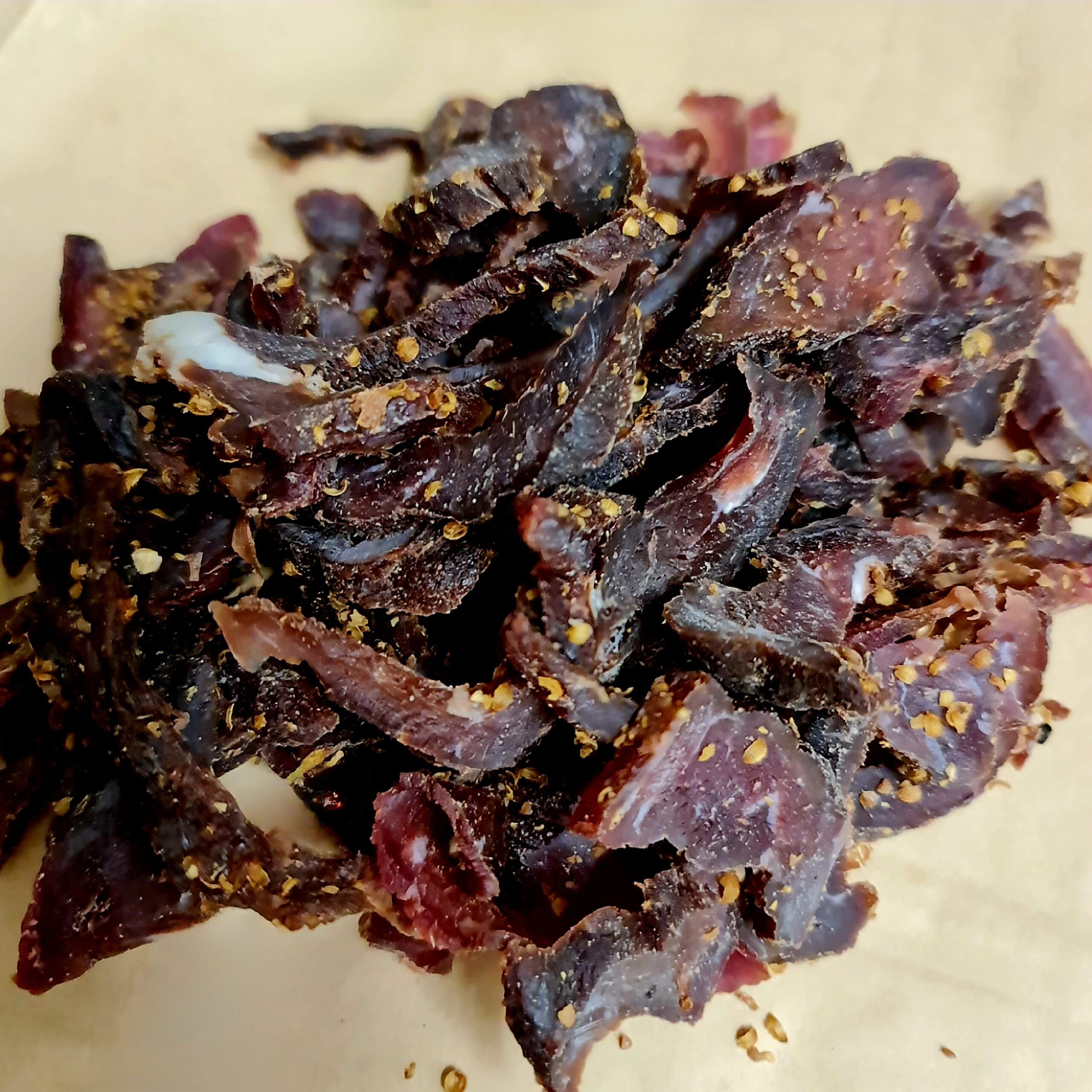
Biltong and Droëwors, General Groceries & Products, Meat products
Biltong (low-fat, sliced – 150g)
CHF 18.90
Biltong. Protein rich. Made with 100% Swiss beef, to original South-African recipes.
Availability: In stock (can be backordered)
Reviews
There are no reviews yet.